
The Coleman root elevator Fig. 3 R is a root elevator designed for precise daily use in surgery, clinic and laboratory. It follows the Coleman pattern, so the working end seats predictably at the site. A knurled / cross-hatched pear handle supports control and tactile feedback through repeated procedures.
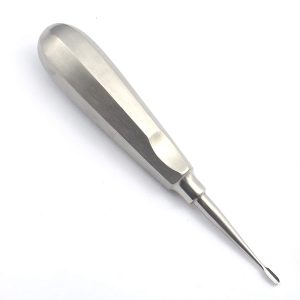
The Coupland root elevator (2.0 mm) is a root elevator designed for precise daily use in surgery, clinic and laboratory. It follows the Coupland pattern in a 2.0 mm working size, so the working end seats predictably at the site. A hex / tapered handle supports control and tactile feedback through repeated procedures.

The Coupland root elevator (2.5 mm) is a root elevator designed for precise daily use in surgery, clinic and laboratory. It follows the Coupland pattern in a 2.5 mm working size, so the working end seats predictably at the site. A hex / tapered handle supports control and tactile feedback through repeated procedures.

The Coupland root elevator (3.0 mm) is a root elevator designed for precise daily use in surgery, clinic and laboratory. It follows the Coupland pattern in a 3.0 mm working size, so the working end seats predictably at the site. A hex / tapered handle supports control and tactile feedback through repeated procedures.
The Crane (Cogswell) root elevator Fig. 6 is a root elevator designed for precise daily use in surgery, clinic and laboratory. It follows the Crane (Cogswell) pattern, so the working end seats predictably at the site. A standard pear handle supports control and tactile feedback through repeated procedures.
The Cryer root elevator Fig. 12 is a root elevator designed for precise daily use in surgery, clinic and laboratory. It follows the Cryer pattern, so the working end seats predictably at the site. A standard pear handle supports control and tactile feedback through repeated procedures.
The Cryer root elevator Fig. 27 is a root elevator designed for precise daily use in surgery, clinic and laboratory. It follows the Cryer pattern, so the working end seats predictably at the site. A standard pear handle supports control and tactile feedback through repeated procedures.
The Cryer root elevator Fig. 27 S is a root elevator designed for precise daily use in surgery, clinic and laboratory. It follows the Cryer pattern, so the working end seats predictably at the site. A standard pear handle supports control and tactile feedback through repeated procedures.
The Cryer root elevator Fig. 28 is a root elevator designed for precise daily use in surgery, clinic and laboratory. It follows the Cryer pattern, so the working end seats predictably at the site. A standard pear handle supports control and tactile feedback through repeated procedures.
The Cryer root elevator Fig. 28 S is a root elevator designed for precise daily use in surgery, clinic and laboratory. It follows the Cryer pattern, so the working end seats predictably at the site. A standard pear handle supports control and tactile feedback through repeated procedures.
The Cryer root elevator Fig. 3 A is a root elevator designed for precise daily use in surgery, clinic and laboratory. It follows the Cryer pattern, so the working end seats predictably at the site. A standard pear handle supports control and tactile feedback through repeated procedures.
The Cryer root elevator Fig. 39 is a root elevator designed for precise daily use in surgery, clinic and laboratory. It follows the Cryer pattern, so the working end seats predictably at the site. A standard pear handle supports control and tactile feedback through repeated procedures.