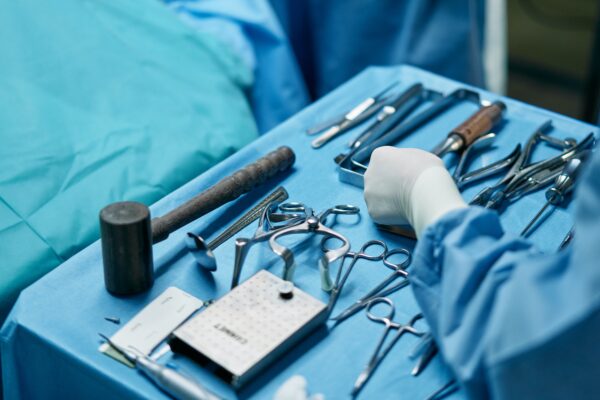
It can be challenging to identify the dental instruments for any specific dental procedure, because there are so many of them. Fresh graduates, dental nurses, and technicians need learning and practice to get familiar with the dental instruments and their uses. Therefore, to ease the learning process dental instruments and categorized according to the dental treatments.
Parts of a Dental Instrument
No matter what category you place the dental instrument under, they all have three basics parts that aid in their physical identification.
- The working end: This part allows the instrument to perform its specific function and differs from instrument to instrument.
- The handle: This is the end part of the instrument that allows the instrument to be held in the proper position with a firm grip.
- The shank: This part of the instrument connects the working end to the handle.
Classification of Dental Instruments
Although it is complicated to define or align the instruments with a particular category, here is a general classification to paint an easier picture for you.
Broadly, instruments are classified as:
- Examination instruments
- Hand cutting instruments
- Restorative instruments
- Instrument accessories
However, when considering all the instruments used in dentistry, there is a lot more to consider, such as:
General Instruments for general check-up and exam:
These instruments are used for dental examination in all fields of dentistry and before any dental treatment:
- Mouth mirror: To directly or indirectly visualize the soft and hard tissues of the patient’s oral cavity. It can also be used to suppress the tongue to retract the cheeks during a dental procedure.
- Tweezers: They can be used to put cotton pellets in the mouth to dry the area or hold other instruments.
- Dental probe: It is used to catch dental caries and often evaluate its depth. It is run on the carious lesion and scrapes any plaque or tartar from the tooth surface for better visualization.
Instruments used for restorative and endodontic treatments:
Hand-held instruments:
- Filling instruments
- Carving instruments
- Plastic instruments
- Chisels
- Pluggers and condensers
- Endodontic files: H-files, K-files
Rotary instruments:
- High speed and slow speed handpiece
- Burs
- Abrasives stones and disks
- Polishing cups and brushes
- Endodontic files: Gates Gliden
Instruments to maintain isolation during operative treatment
- Rubber dam sheets
- Rubber dam clamps
- Rubber dam frame
- Rubber dam forceps
- Cotton
Instruments for extraction:
Non-surgical instruments:
- Forceps: lower molar forceps, upper molar forceps, lower incisor forceps, upper incisor forceps, bayonets, ronguers
- Elevators: Cryer elevators, Coupland elevator, periosteal elevator, hospital elevator, Warwick James elevator, and winter elevator
- Bone filers
Surgical instruments:
- Scalpels
- Surgical blades
- Suture needles
- Suction
- Needle holders
- Artery forceps
- Instruments for bone removal
Instruments for periodontal treatment and surgeries
- Manual and ultrasonic scalers
- Surgical scalpels/knives/files
- Periotomes
- Surgical curettes
- Surgical chisels
Instruments used in prosthodontics treatment
- Impression trays
- Plaster knives
- Wax knife
- Wax carvers
- Cement spatulas
- Glass slabs
Instruments used in orthodontic treatment
- Metal wires, brackets, and bands
- Orthodontic forceps
- Wire cutters
- Pliers
Apart from mainstream dental instruments, there is armamentarium like needles and syringes to administer local anesthesia.
These are only some of the many dental instruments named here; for more information, visit our page or contact us to get further details.